
Start writing here...
Introduction
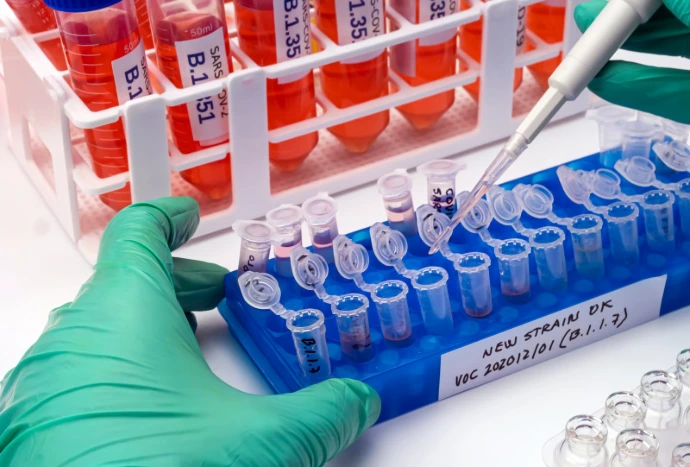
Polymerase Chain Reaction (PCR) and Reverse Transcription Quantitative PCR (RT-qPCR) are essential molecular biology techniques used to detect, amplify, and analyze nucleic acids.
PCR allows researchers to amplify a specific DNA sequence, producing millions of copies from a small initial amount of DNA. RT-qPCR extends this principle to RNA molecules by first converting RNA into complementary DNA (cDNA), followed by quantitative PCR.
These techniques are widely used in molecular biology, biotechnology, microbiology, genetics, research, and many other scientific fields.
What Is PCR?
Polymerase Chain Reaction, commonly known as PCR, is a molecular technique used to selectively amplify a specific region of DNA. The technique uses short DNA sequences called primers to identify the region of interest and an enzyme called DNA polymerase to synthesize new DNA strands.
Through repeated cycles of heating and cooling, the target DNA is copied multiple times. Ideally, the amount of target DNA approximately doubles during each amplification cycle. After several cycles, a very large number of copies of the target sequence can be generated, making it possible to detect and analyze DNA that was initially present in very small quantities.
Main Steps of PCR
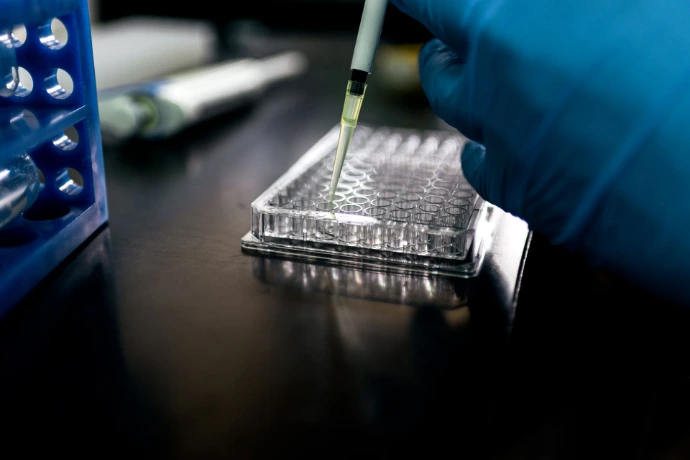
PCR consists of three main steps. During denaturation, high temperature separates the two DNA strands. During annealing, the temperature decreases and the primers bind to their complementary sequences. During extension, DNA polymerase adds nucleotides to synthesize new DNA strands. These steps are repeated several times to increase the amount of target DNA.
What Is RT-qPCR?
Reverse Transcription Quantitative PCR (RT-qPCR) combines reverse transcription with quantitative PCR. RNA is first converted into cDNA, and the cDNA is then amplified while fluorescence is measured during the PCR cycles. RT-qPCR is widely used to study gene expression and compare the expression of specific genes between different samples.
Fluorescence Detection
qPCR monitors DNA amplification through fluorescence. Two common approaches are SYBR Green and fluorescent probes. SYBR Green binds to double-stranded DNA, while probes are designed to specifically recognize a target sequence. The increase in fluorescence reflects the accumulation of amplified DNA.
Understanding Ct Values
The Ct (Cycle threshold) is the cycle at which the fluorescence signal crosses a defined threshold. In general, a lower Ct indicates a greater amount of starting target, while a higher Ct indicates a smaller amount of starting target, assuming comparable experimental conditions.
Reference Genes
Gene expression is usually normalized using a reference gene, such as GAPDH, ACTB, or 18S rRNA. A suitable reference gene should remain relatively stable under the experimental conditions. Normalization helps reduce variations between samples and improves the reliability of gene-expression comparisons.
ΔCt and ΔΔCt
The ΔCt method compares the Ct of the target gene with the Ct of the reference gene. The ΔΔCt method then compares the normalized expression of an experimental sample with a control sample. Relative gene expression is commonly calculated using 2⁻ΔΔCt, when the required assumptions are satisfied.
Applications
PCR can be used for DNA amplification, genetic research, molecular cloning, microorganism detection, and DNA analysis. RT-qPCR is particularly useful for studying gene expression, cellular responses, inflammation, oxidative stress, disease mechanisms, and responses to experimental treatments.
PCR vs RT-qPCR
PCR
Polymerase Chain Reaction (PCR) is a molecular biology technique used to amplify a specific region of DNA. It uses a DNA template, primers, DNA polymerase, nucleotides, and appropriate reaction conditions. Through repeated cycles of denaturation, annealing, and extension, the target DNA sequence is copied many times, producing a large amount of DNA that can be detected and analyzed.
Conventional PCR is mainly used when the objective is to detect or amplify a particular DNA sequence. After amplification, the PCR products are commonly analyzed using agarose gel electrophoresis to determine whether the expected DNA fragment is present and to estimate its size. PCR is widely used in genetic research, microbiology, biotechnology, molecular cloning, and DNA analysis.

RT-qPCR
Reverse Transcription Quantitative PCR (RT-qPCR) is a technique used mainly to study RNA and gene expression. Since PCR amplifies DNA rather than RNA, the RNA is first converted into complementary DNA (cDNA) using an enzyme called reverse transcriptase. The resulting cDNA is then amplified using quantitative PCR.
Unlike conventional PCR, RT-qPCR monitors DNA amplification in real time through fluorescence. The technique generates Ct or Cq values that can be used to compare the relative amount of a target transcript between samples. RT-qPCR is therefore widely used to investigate gene expression and molecular responses under different experimental conditions.